Public Relations 101

November 12th, 2006

From sayat-travel.kz:

ALMATY, Kazakhstan – Sayat Tour, a leading Kazakh tour operator, announced today several new tours for Americans and others who are willing to travel to Kazakhstan and see for themselves what the real country, not the Borat’s version, is really like.

The tours, called “Kazakhstan vs. Boratistan” and “Jagzhemash!!! See the Real Kazakhstan”, include visits to the cosmopolitan Almaty and its beautiful surroundings, tours of ancient sites such as the Hodja Akhmed Yassaui Mausoleum in Turkestan, as well as plentiful opportunities to meet and interact with the real Kazakhs. In addition to sightseeing, tours also include visits to local colorful bazaars, artifact shops and high fashion boutiques, as well as trying kumyss, the deliciously tasting Kazakh traditional drink made from fermented horse milk.

Marianna Tolekenova, Sayat’s Executive Director, said: “With the release of Borat: Cultural Learnings of America for Make Benefit Glorious Nation of Kazakhstan, we are hoping many Americans will want to engage in ‘cultural learnings’ of that unknown ‘glorious nation’ for their own ‘make benefit.’ That is why we are launching these new tours and hoping the Americans will come visit us.”

Earlier in October 2006, a high ranking Kazakh official said the creator of Borat, British comedian Sasha Baron Cohen, would be welcome in Kazakhstan. First Deputy Foreign Minister Rakhat Aliyev said, “His trip could yield a lot of discoveries — that women not only travel inside buses but also drive their own cars, that we make wine from grapes, that Jews can freely attend synagogues and so on.”

Update (11/13): In response to a comment by Greg Kuperberg, I’ve now reached a halakhic ruling on the morality of Sacha Baron Cohen’s antics. Go to the comments section if you want to read it.

Woohoo!

November 9th, 2006

Beating swords into pitchforks

November 6th, 2006

Here’s a heartwarming story of religious reconciliation in Israel, one that puts the lie to those cynics who thought such ecumenism impossible. It seems that large portions of Jerusalem’s Orthodox Jewish, Muslim, and Christian communities have finally set aside their differences, and joined together to support a common goal: threatening the marchers in a Gay Pride parade with death.

This week, let’s overthrow the Taliban

November 5th, 2006


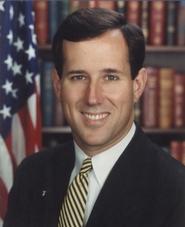
Let this man’s face serve as a reminder to all my American friends, to haul your respective asses to your respective polling places with no excuses accepted. Keep in mind that this year the Democratic voting day is Tuesday November 7th, while the Republican voting day is Wednesday November 8th.

(Me? I couldn’t find a precinct station in Waterloo for some strange reason, so I mailed an absentee ballot back to New Hope, PA.)

More tender nuggets

November 3rd, 2006

You asked for ’em, you got ’em. (Do you want fries with that?)

  1. Suppose a baby is given some random examples of grammatical and ungrammatical sentences, and based on that, it wants to infer the general rule for whether or not a given sentence is grammatical. If the baby can do this with reasonable accuracy and in a reasonable amount of time, for any “regular grammar” (the very simplest type of grammar studied by Noam Chomsky), then that baby can also break the RSA cryptosystem.
  2. Oded Regev recently invented a public-key cryptosystem with an interesting property: though it’s purely classical, his system only known to be secure under the assumption that certain problems are hard for quantum computers. The upside is that, if these problems are hard for quantum computers, then Regev’s system (unlike RSA) is also secure against attack by quantum computers!
  3. Suppose N boys and N girls join a dating service. We write down an N-by-N matrix, where the (i,j) entry equals 1 if the ith boy and the jth girl are willing to date each other, and 0 if they aren’t. We want to know if it’s possible to pair off every boy and girl with a willing partner. Here’s a simple way to find out: first rescale every row of the matrix to sum to 1. Then rescale every column to sum to 1. Then rescale every row, then rescale every column, and so on N5 times. If at the end of this scaling process, every row and column sum is between 1-1/N and 1+1/N, then it’s possible to pair off the boys and girls; otherwise it isn’t.
  4. If two graphs are isomorphic, then a short and simple proof of that fact is just the isomorphism itself. But what if two graphs aren’t isomorphic? Is there also a short proof of that — one that doesn’t require checking every possible way of matching up the vertices? Under a plausible assumption, we now know that there is such a proof, for any pair of non-isomorphic graphs whatsoever (even with the same eigenvalue spectrum, etc). What’s the plausible assumption? It has nothing to do with graphs! Roughly, it’s that a certain problem, which is known to take exponential time for any one algorithm, still takes exponential time for any infinite sequence of algorithms.
  5. Suppose we had a small “neural network” with only three or four layers of neurons between the input and output, where the only thing each neuron could do was to compute the sum of its input signals modulo 2. We can prove, not surprisingly, that such a neural net would be extremely limited in its power. Ditto if we replace the 2 by 3, 4, 5, 7, 8, 9, or 11. But if we replace the 2 by 6, 10, or 12, then we no longer know anything! For all we know, a three-layer neural network, composed entirely of “mod 6 neurons,” could solve NP-complete problems in polynomial time.

Logicians on safari

November 2nd, 2006

Sean Carroll, who many of you know from Cosmic Variance, asked the following question in response to my last entry:

I’m happy to admit that I don’t know anything about “one-way functions and interactive proofs.” So, in what sense has theoretical computer science contributed more in the last 30 years to our basic understanding of the universe than particle physics or cosmology? (Despite the fact that I’m a cosmologist, I don’t doubt your statement — I’d just like to be able to explain it in public.)

I posted my response as a comment, but it’s probably better to make it an entry of its own. So:

Hi Sean,

Thanks for your question!

Of course I was joking when I mentioned “objective standards” for ranking scientific fields. Depending on which questions keep you up at night, different parts of “humankind’s basic picture of the universe” will seem larger or smaller. (To say that, of course, is not to suggest any relativism about the picture itself.)

What I can do, though, is to tell you why — by my own subjective standards — the contributions of theoretical computer science over the last 30 years rival those of theoretical physics or any other field I know about. Of course, people will say I only think that because I’m a theoretical computer scientist, but that gets the causal arrow wrong: I became a theoretical computer scientist because, as a teenager, I thought it!

It’s probably best to start with some examples.

  1. We now know that, if an alien with enormous computational powers came to Earth, it could prove to us whether White or Black has the winning strategy in chess. To be convinced of the proof, we would not have to trust the alien or its exotic technology, and we would not have to spend billions of years analyzing one move sequence after another. We’d simply have to engage in a short conversation with the alien about the sums of certain polynomials over finite fields.
  2. There’s a finite (and not unimaginably-large) set of boxes, such that if we knew how to pack those boxes into the trunk of your car, then we’d also know a proof of the Riemann Hypothesis. Indeed, every formal proof of the Riemann Hypothesis with at most (say) a million symbols corresponds to some way of packing the boxes into your trunk, and vice versa. Furthermore, a list of the boxes and their dimensions can be feasibly written down.
  3. Supposing you do prove the Riemann Hypothesis, it’s possible to convince someone of that fact, without revealing anything other than the fact that you proved it. It’s also possible to write the proof down in such a way that someone else could verify it, with very high confidence, having only seen 10 or 20 bits of the proof.
  4. If every second or so your computer’s memory were wiped completely clean, except for the input data; the clock; a static, unchanging program; and a counter that could only be set to 1, 2, 3, 4, or 5, it would still be possible (given enough time) to carry out an arbitrarily long computation — just as if the memory weren’t being wiped clean each second. This is almost certainly not true if the counter could only be set to 1, 2, 3, or 4. The reason 5 is special here is pretty much the same reason it’s special in Galois’ proof of the unsolvability of the quintic equation.
  5. It would be great to prove that RSA is unbreakable by classical computers. But every known technique for proving that would, if it worked, simultaneously give an algorithm for breaking RSA! For example, if you proved that RSA with an n-bit key took n5 steps to break, you would’ve discovered an algorithm for breaking it in 2n^1/5 steps. If you proved that RSA took 2n^1/3 steps to break, you would’ve discovered an algorithm for breaking it in n(log n)^2 steps. As you show the problem to be harder, you simultaneously show it to be easier.

Alright, let me stop before I get carried away. The examples I’ve listed (and hundreds more like them) are not exactly discoveries about physics, but they don’t have the flavor of pure math either. And even if they have some practical implications for computing (which they do), they certainly don’t have the flavor of nitty-gritty software engineering.

So what are they then? Maybe it’s helpful to think of them as “quantitative epistemology”: discoveries about the capacities of finite beings like ourselves to learn mathematical truths. On this view, the theoretical computer scientist is basically a mathematical logician on a safari to the physical world: someone who tries to understand the universe by asking what sorts of mathematical questions can and can’t be answered within it. Not whether the universe is a computer, but what kind of computer it is! Naturally, this approach to understanding the world tends to appeal most to people for whom math (and especially discrete math) is reasonably clear, whereas physics is extremely mysterious.

In my opinion, one of the biggest challenges for our time is to integrate the enormous body of knowledge in theoretical computer science (or quantitative epistemology, or whatever you want to call it) with the rest of what we know about the universe. In the past, the logical safari mostly stayed comfortably within 19th-century physics; now it’s time to venture out into the early 20th century. Indeed, that’s exactly why I chose to work on quantum computing: not because I want to build quantum computers (though I wouldn’t mind that), but because I want to know what a universe that allows quantum computers is like.

Incidentally, it’s also why I try hard to keep up with your field. If I’m not mistaken, less than a decade ago cosmologists made an enormous discovery about the capacity of finite beings to learn mathematical truths: namely, that no computation carried out in the physical world can ever involve more than 1/Λ ~ 10122 bits.

Best,
Scott

My daily dose of depression

November 1st, 2006

Yesterday’s Times ran an essay by Steve Lohr, based on speeches about the future of computing given by my former teachers Richard Karp and Jon Kleinberg. Though most of the essay is welcome and unobjectionable, let’s look at the first two paragraphs:

Computer science is not only a comparatively young field, but also one that has had to prove it is really science. Skeptics in academia would often say that after Alan Turing described the concept of the “universal machine” in the late 1930’s — the idea that a computer in theory could be made to do the work of any kind of calculating machine, including the human brain — all that remained to be done was mere engineering.

The more generous perspective today is that decades of stunningly rapid advances in processing speed, storage and networking, along with the development of increasingly clever software, have brought computing into science, business and culture in ways that were barely imagined years ago. The quantitative changes delivered through smart engineering opened the door to qualitative changes.

So, here are the two options on offer from the paper of record: either

  1. computer science was finished off by Alan Turing, or
  2. “stunningly rapid advances in processing speed, storage and networking” have reopened it just recently.

Even among the commenters on this post by Chad Orzel — which Dave Bacon forwarded to me with the subject line “bait” — awareness of any third possibility seems depressingly rare. Judging from the evidence, it’s not that people have engaged the mysteries of P versus NP, randomness and determinism, one-way functions and interactive proofs, and found them insufficiently deep. Rather, as bizarre as it sounds, it’s that people don’t know these mysteries exist — just as they wouldn’t know about black holes or the Big Bang if no one told them. If you want to understand why our subject — which by any objective standard, has contributed at least as much over the last 30 years as (say) particle physics or cosmology to humankind’s basic picture of the universe — receives a whopping $5 million a year from the NSF (with even that in constant danger), look no further.

My googol rank

October 31st, 2006

According to my usage statistics, of the people who come to scottaaronson.com via a search engine, about 5% do so by typing in one of the following queries:

biggest number in the world
the biggest number in the world
what is the largest number
largest number in the world
what is the biggest number

These people are then led to my big numbers essay, which presumably befuddles them even more.

So, let me satisfy the public’s curiosity once and for all: the biggest number in the world is a million billion gazillion. But stay tuned: even as I write, Space Shuttle astronauts are combing the galaxy for an even bigger number!

Quantum Computing Since Democritus Lecture 6: P, NP, and Friends

October 29th, 2006

P, NP, and Friends. A whole undergraduate complexity course in one HTML file.

For those of you who already know this stuff: forgive me for boring you. For those who don’t: read, learn, and join the Enlightened.

Note: The comment section was down all day, but it’s back now. Google ought to be ashamed to be running something as rickety and unreliable as Blogger. Well, I guess you get what you pay for.

Mistake of the Week: “X works on paper, but not in the real world”

October 26th, 2006

Time again for Shtetl-Optimized’s Mistake of the Week series! This week my inspiration comes from a paper that’s been heating up the quantum blogosphere (the Blochosphere?): Is Fault-Tolerant Quantum Computation Really Possible? by M. I. Dyakonov. I’ll start by quoting my favorite passages:

The enormous literature devoted to this subject (Google gives 29300 hits for “fault-tolerant quantum computation”) is purely mathematical. It is mostly produced by computer scientists with a limited understanding of physics and a somewhat restricted perception of quantum mechanics as nothing more than unitary transformations in Hilbert space plus “entanglement.”

Whenever there is a complicated issue, whether in many-particle physics, climatology, or economics, one can be almost certain that no theorem will be applicable and/or relevant, because the explicit or implicit assumptions, on which it is based, will never hold in reality.

I’ll leave the detailed critique of Dyakonov’s paper to John Preskill, the Pontiff, and other “computer scientists” who understand the fault-tolerance theorem much better than a mere physicist like me. Here I instead want to take issue with an idea that surfaces again and again in Dyakonov’s paper, is almost universally accepted, but is nevertheless false. The idea is this: that it’s possible for a theory to “work on paper but not in the real world.”

The proponents of this idea go wrong, not in thinking that a theory can fail in the real world, but in thinking that if it fails, then the theory can still “work on paper.” If a theory claims to describe a phenomenon but doesn’t, then the theory doesn’t work, period — neither in the real world nor on paper. In my view, the refrain that something “works on paper but not in the real world” serves mainly as an intellectual crutch: a way for the lazy to voice their opinion that something feels wrong to them, without having to explain how or where it’s wrong.

“Ah,” you say, “but theorists often make assumptions that don’t hold in the real world!” Yes, but you’re sidestepping the key question: did the theorists state their assumptions clearly or not? If they didn’t, then the fault lies with them; if they did, then the fault lies with those practitioners who would milk a nonspherical cow like a spherical one.

To kill a theory (in the absence of direct evidence), you need to pinpoint which of its assumptions are unfounded and why. You don’t become more convincing by merely finding more assumptions to criticize; on the contrary, the “hope something sticks” approach usually smacks of desperation:

There’s no proof that the Earth’s temperature is rising, but even if there was, there’s no proof that humans are causing it, but even if there was, there’s no proof that it’s anything to worry about, but even there was, there’s no proof that we can do anything about it, but even if there was, it’s all just a theory anyway!

As should be clear, “just a theory” is not a criticism: it’s a kvetch.

Marge: I really think this is a bad idea.
Homer: Marge, I agree with you — in theory. In theory, communism works. In theory.

Actually, let’s look at Homer’s example of communism, since nothing could better illustrate my point. When people say that communism works “in theory,” they presumably mean that it works if everyone is altruistic. But regulating selfishness is the whole problem political systems are supposed to solve in the first place! Any political system that defines the problem away doesn’t work on paper, any more than “Call a SAT oracle” works on paper as a way to solve NP-complete problems. Once again, we find the “real world / paper” distinction used as a cover for intellectual laziness.

Let me end this rant by preempting the inevitable cliché that “in theory, there’s no difference between theory and practice; in practice, there is.” Behold my unanswerable retort:

In theory, there’s no difference between theory and practice even in practice.