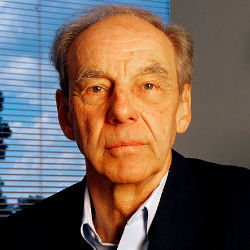
(1) Since I didn’t blog about this before: huge congratulations to David Deutsch, Charles Bennett, Gilles Brassard, and my former MIT colleague Peter Shor, and separately to Dan Spielman, for their well-deserved Breakthrough Prizes! Their contributions are all so epochal, so universally known to all of us in quantum information and theoretical computer science, that there’s little I can write to gild the lily, except to say how much I’ve learned by interacting with all five of them personally. I did enjoy this comment on the Breakthrough Prizes by someone on Twitter: “As long as that loudmouth Scott Aaronson keeps getting ignored, I’ll be happy.”
(2) My former UT colleague Ila Fiete brought to my attention an important scientists’ petition to the White House. The context is that the Biden administration has announced new rules requiring federally-funded research papers to be freely available to the public without delay. This is extremely welcome—in fact, I’ve advocated such a step since I first became aware of the scourge of predatory journals around 2004. But the looming danger is that publishers will just respond by leaning more heavily on the “author pays” model—i.e., hitting up authors or their institutions for thousands of dollars in page fees—and we’ll go from only the credentialed few being able to read papers that aren’t on preprint archives or the like, to only the credentialed few being able to publish them. The petition urges the White House to build, or fund the research community to build, an infrastructure that will make scientific publishing truly open to everyone. I’ve signed it, and I hope you’ll consider signing too.
(3) Bill Gasarch asked me to announce that he, my former MIT colleague Erik Demaine, and Mohammad Hajiaghayi have written a brand-new book entitled Computational Intractability: A Guide to Algorithmic Lower Bounds, and a free draft is available online. It looks excellent, like a Garey & Johnson for the 21st century. Bill and his coauthors are looking for feedback. I was happy to help them by advertising this—after all, it’s not as if Bill’s got his own complexity blog for such things!
(4) Back when Google was still a novelty—maybe 2000 or so—I had my best friend, the now-famous computer security researcher Alex Halderman, over for Rosh Hashanah dinner with my family. Alex and I were talking about how Google evaded the limitations of all the previous decades’ worth of information retrieval systems. One of my relatives, however, misheard “Google” as “kugel” (basically a dense block of noodles held together with egg), and so ended up passing the latter to Alex. “What is this?” Alex asked. Whereupon my uncle deadpanned, “it’s a noodle retrieval system.” Since then, every single Rosh Hashanah dinner, I think about querying the kugel to retrieve the noodles within, and how the desired search result is just the trivial “all of them.”
As I slept fitfully, still recovering from COVID, I had one of the more interesting dreams of my life:
I was desperately trying to finish some PowerPoint slides in time to give a talk. Uncharacteristically for me, one of the slides displayed actual code. This was a dream, so nothing was as clear as I’d like, but the code did something vaguely reminiscent of Rosser’s Theorem—e.g., enumerating all proofs in ZFC until it finds the lexicographically first proof or disproof of a certain statement, then branching into cases depending on whether it’s a proof or a disproof. In any case, it was simple enough to fit on one slide.
Suddenly, though, my whole presentation was deleted. Everything was ruined!
One of the developers of PowerPoint happened to be right there in the lecture hall (of course!), so I confronted him with my laptop and angrily demanded an explanation. He said that I must have triggered the section of Microsoft Office that tries to detect and prevent any discussion of logical paradoxes that are too dangerous for humankind—the ones that would cause people to realize that our entire universe is just an illusion, a sandbox being run inside an AI, a glitch-prone Matrix. He said it patronizingly, as if it should’ve been obvious: “you and I both know that the Paradoxes are not to be talked about, so why would you be so stupid as to put one in your presentation?”
My reaction was to jab my finger in the guy’s face, shove him, scream, and curse him out. At that moment, I wasn’t concerned in the slightest about the universe being an illusion, or about glitches in the Matrix. I was concerned about my embarrassment when I’d be called in 10 minutes to give my talk and would have nothing to show.
My last thought, before I woke with a start, was to wonder whether Greg Kuperberg was right and I should give my presentations in Beamer, or some other open-source software, and then I wouldn’t have had this problem.
A coda: I woke a bit after 7AM Central and started to write this down. But then—this is now real life (!)—I saw an email saying that a dozen people were waiting for me in a conference room in Europe for an important Zoom meeting. We’d gotten the time zones wrong; I’d thought that it wasn’t until 8AM my time. If not for this dream causing me to wake up, I would’ve missed the meeting entirely.
The same thing Salman Rushdie learned: either you spend your entire life in hiding, or eventually it’ll come for you. Years might pass. You might emerge from hiding once, ten times, a hundred times, be fine, and conclude (emotionally if not intellectually) that the danger must now be over, that if it were going to come at all then it already would have, that maybe you’re even magically safe. But this is just the nature of a Poisson process: 0, 0, 0, followed by 1.
First comes the foreboding (in my case, on the flight back home from the wonderful CQIQC meeting in Toronto)—“could this be COVID?”—the urge to reassure yourself that it isn’t, the premature relief when the test is negative. Only then, up to a day later, comes the second vertical line on the plastic cartridge.
I’m grateful for the vaccines, which have up to a 1% probability of having saved my life. My body was as ready for this virus as my brain would’ve been for someone pointing a gun at my head and demanding to know a proof of the Karp-Lipton Theorem. All the same, I wish I also could’ve taken a nasal vaccine, to neutralize the intruder at the gate. Through inaction, through delays, through safetyism that’s ironically caused millions of additional deaths, the regulatory bureaucracies of the US and other nations have a staggering amount to answer for.
Likewise, Paxlovid should’ve been distributed like candy, so that everyone would have a supply and could start the instant they tested positive. By the time you’re able to book an online appointment and send a loved one to a pharmacy, a night has likely passed and the Paxlovid is less effective.
By the usual standards of a cold, this is mild. But the headaches, the weakness, the tiredness … holy crap the tiredness. I now know what it’s like to be a male lion or a hundred-year-old man, to sleep for 20 hours per day and have that feel perfectly appropriate and normal. I can only hope I won’t be one of the long-haulers; if I were, this could be the end of my scientific career. Fortunately the probability seems small.
You can quarantine in your bedroom, speak to your family only through the door, have meals passed to you, but your illness will still cast a penumbra on everyone around you. Your spouse will be stuck watching the kids alone. Other parents won’t let their kids play with your kids … and you can’t blame them; you’d do the same in their situation.
It’s hard to generalize from a sample size of 1 (or 2 if you count my son Daniel, who recovered from a thankfully mild case half a year ago). Readers: what are your COVID stories?
Back in January, you might recall, Skype cofounder Jaan Tallinn’s Survival and Flourishing Fund (SFF) was kind enough to earmark $200,000 for me to donate to any charitable organizations of my choice. So I posted a call for proposals on this blog. You “applied” to my “foundation” by simply sending me an email, or leaving a comment on this blog, with a link to your organization’s website and a 1-paragraph explanation of what you wanted the grant for, and then answering any followup questions that I had.
After receiving about 20 awesome proposals in diverse areas, in the end I decided to split the allotment among organizations around the world doing fantastic, badly-needed work in math and science enrichment at the precollege level. These included Canada/USA Mathcamp, AddisCoder, a magnet school in Maine, a math circle in Oregon, a math enrichment program in Ghana, and four others. I chose to focus on advanced precollege STEM education both because I have some actual knowledge and experience there, and because I wanted to make a strong statement about an underfunded cause close to my heart that’s recently suffered unjust attacks.
To quote the immortal Carl Sagan, from shortly before his death:
[C]hildren with special abilities and skills need to be nourished and encouraged. They are a national treasure. Challenging programs for the “gifted” are sometimes decried as “elitism.” Why aren’t intensive practice sessions for varsity football, baseball, and basketball players and interschool competition deemed elitism? After all, only the most gifted athletes participate. There is a self-defeating double standard at work here, nationwide.
Anyway, the thank-you notes from the programs I selected were some of the most gratifying emails I’ve ever received.
But wait, it gets better! After reading about the Scott Aaronson Speculation Grants on this blog, representatives from a large, reputable family foundation contacted me to say that they wanted to be involved too. This foundation, which wishes to remain anonymous at this stage although not to the potential grant recipient, intends to make a single US$250,000 grant in the area of advanced precollege STEM education. They wanted my advice on where their grant should go.
Of course, I could’ve simply picked one of the same wonderful organizations that SFF and I helped in the first round. On reflection, though, I decided that it would be more on the up-and-up to issue a fresh call for proposals.
So: do you run a registered 501(c)(3) nonprofit dedicated to advanced precollege STEM education? If so, email me or leave a comment here by Friday, September 9, telling me a bit about what your organization does and what more it could do with an extra $250K. Include a rough budget, if that will help convince me that you can actually make productive use of that amount, that it won’t just sit in your bank account. Organizations that received a Scott Aaronson Speculation Grant the last time are welcome to reapply; newcomers are also welcome.
I’ll pass up to three finalists along to the funder, which will then make a final decision as to the recipient. The funder will be directly in touch with the potential grantee(s) and will proceed with its intake, review and due diligence process.
We expect to be able to announce a recipient on or around October 24. Can’t wait to see what people come up with!
They’re 155 pages of awesome—for a certain extremely specific definition of “awesome”—which I’m hereby offering to the world free of charge (for noncommercial use only, of course). They cover material that I taught, for the first time, in my Introduction to Quantum Information Science II undergrad course at UT Austin in Spring 2022.
The new notes pick up exactly where my older QIS I lecture notes left off, and they presuppose familiarity with the QIS I material. So, if you’re just beginning your quantum information journey, then please start with my QIS I notes, which presuppose only linear algebra and a bit of classical algorithms (e.g., recurrence relations and big-O notation), and which self-containedly explain all the rules of QM, moving on to (e.g.) quantum circuits, density matrices, entanglement entropy, Wiesner’s quantum money, QKD, quantum teleportation, the Bell inequality, interpretations of QM, the Shor 9-qubit code, and the algorithms of Deutsch-Jozsa, Bernstein-Vazirani, Simon, Shor, and Grover. Master all that, and you’ll be close to the quantum information research frontier of circa 1996.
My new QIS II notes cover a bunch of topics, but the main theme is “perspectives on quantum computing that go beyond the bare quantum circuit model, and that became increasingly central to the field from the late 1990s onwards.” Thus, it covers:
Hamiltonians, ground states, the adiabatic algorithm, and the universality of adiabatic QC
The stabilizer formalism, the 1996 Gottesman-Knill Theorem on efficient classical simulation of stabilizer QC, my and Gottesman’s 2004 elaborations, boosting up to universality via “magic states,” transversal codes, and the influential 2016 concept of stabilizer rank
Bosons and fermions: the formalism of Fock space and of creation and annihilation operators, connection to the permanents and determinants of matrices, efficient classical simulation of free fermionic systems (Valiant’s 2002 “matchcircuits”), the 2001 Knill-Laflamme-Milburn (KLM) theorem on universal optical QC, BosonSampling and its computational complexity, and the current experimental status of BosonSampling
Cluster states, Raussendorf and Briegel’s 2000 measurement-based quantum computation (MBQC), and Gottesman and Chuang’s 1999 “gate teleportation” trick
Matrix product states, and Vidal’s 2003 efficient classical simulation of “slightly entangled” quantum computations
Extra bonus topics include:
The 2007 Broadbent-Fitzsimons-Kashefi (BFK) protocol for blind and authenticated QC; brief discussion of later developments including Reichardt-Unger-Vazirani 2012 and Mahadev 2018
Basic protocols for quantum state tomography
My 2007 work on PAC-learnability of quantum states
The “dessert course”: the black hole information problem, and the Harlow-Hayden argument on the computational hardness of decoding Hawking radiation
Master all this, and hopefully you’ll have the conceptual vocabulary to understand a large fraction of what people in quantum computing and information care about today, how they now think about building scalable QCs, and what they post to the quant-ph arXiv.
Note that my QIS II course is complementary to my graduate course on quantum complexity theory, for which the lecture notes are here. There’s very little overlap between the two (and even less overlap between QIS II and Quantum Computing Since Democritus).
The biggest, most important topic related to the QIS II theme that I didn’t cover was topological quantum computing. I’d wanted to, but it quickly became clear that topological QC begs for a whole course of its own, and that I had neither the time nor the expertise to do it justice. In retrospect, I do wish I’d at least covered the Kitaev surface code.
Crucially, these lecture notes don’t represent my effort alone. I worked from draft scribe notes prepared by the QIS II students, who did a far better job than I had any right to expect (including creating the beautiful figures). My wonderful course TA and PhD student Daniel Liang, along with students Ethan Tan, Samuel Ziegelbein, and Steven Han, then assembled everything, fixed numerous errors, and compiled the bibliography. I’m grateful to all of them. At the last minute, we had a LaTeX issue that none of us knew how to fix—but, in response to a plea, Shtetl-Optimized reader Pablo Cingolani generously volunteered to help, completed the work by the very next day (I’d imagined it taking a month!), and earned a fruit basket from me in gratitude.
Anyway, let me know of any mistakes you find! We’ll try to fix them.
Way back in the covid-filled summer of 2020, I wrote a survey article about the ridiculously-rapidly-growing Busy Beaver function. My survey then expanded to nearly twice its original length, with the ideas, observations, and open problems of commenters on this blog. Ever since, I’ve felt a sort of duty to blog later developments in BusyBeaverology as well. It’s like, I’ve built my dam, I’ve built my lodge, I’m here in the pond to stay!
So without further ado:
This May, Pavel Kropitz found a machine demonstrating that $$ BB(6) \ge 10^{10^{10^{10^{10^{10^{10^{10^{10^{10^{10^{10^{10^{10^{10}}}}}}}}}}}}}} $$ (15 times)—thereby blasting through his own 2010 record, that BB(6)≥1036,534. Or, for those tuning in from home: Kropitz constructed a 6-state, 2-symbol, 1-tape Turing machine that runs for at least the above number of steps, when started on an initially blank tape, and then halt. The machine was analyzed and verified by Pascal Michel, the modern keeper of Busy Beaver lore. In my 2020 survey, I’d relayed an open problem posed by my then 7-year-old daughter Lily: namely, what’s the first n such that BB(n) exceeds A(n), the nth value of the Ackermann function? All that’s been proven is that this n is at least 5 and at most 18. Kropitz and Michel’s discovery doesn’t settle the question—titanic though it is, the new lower bound on BB(6) is still less than A(6) (!!)—but in light of this result, I now strongly conjecture that the crossover happens at either n=6 or n=7. Huge congratulations to Pavel and Pascal!
Tristan Stérin and Damien Woods wrote to tell me about a new collaborative initiative they’ve launched called BB Challenge. With the participation of other leading figures in the neither-large-nor-sprawling Busy Beaver world, Tristan and Damien are aiming, not only to pin down the value of BB(5)—proving or disproving the longstanding conjecture that BB(5)=47,176,870—but to do so in a formally verified way, with none of the old ambiguities about which Turing machines have or haven’t been satisfactorily analyzed. In my survey article, I’d passed along a claim that, of all the 5-state machines, only 25 remained to be analyzed, to understand whether or not they run forever—the “default guess” being that they all do, but that proving it for some of them might require fearsomely difficult number theory. With their more formal and cautious approach, Tristan and Damien still count 1.5 million (!) holdout machines, but they hope to cut down that number extremely rapidly. If you’re feeling yourself successfully nerd-sniped, please join the quest and help them out!
Several people have asked me to comment about a Financial Times opinion piece entitled The Quantum Computing Bubble (subtitle: “The industry has yet to demonstrate any real utility, despite the fanfare, billions of VC dollars and three Spacs”) (archive link). The piece is purely deflationary—not a positive word in it—though it never goes so far as to suggest that QC is blocked by any Gil-Kalai-like fundamental principle, nor does it even evince curiosity about that question.
As it happens, the author, physicist Nikita Gourianov, had emailed me a few days ago with some nice words about my own skeptical efforts on Shtetl-Optimized, and a request for comment on his article. So, as a way to get back into blogging after a 2-week hiatus, I figured I’d share my respoinse.
Hi Nikita,
Thanks for the kind words about my blog, and for your piece, which I just read. There’s a great deal of truth in what you write, but I also take issue with a few points. You say:
A convincing strategy for overcoming these errors has not yet been demonstrated, making it unclear as to when — if ever — it will become possible to build a large-scale, fault-tolerant quantum computer.
In one sense this is tautologically true — the only fully convincing and clear demonstration that something is possible is to do it, as with the Wright brothers or the Trinity nuclear test. In other sense, though, we’ve known the “strategy” since the 1990s. It’s just that the fault-tolerance theorem called for gate fidelities 5-6 orders of magnitude better than anything achievable at the time. In the 25 years since, about 3 of those orders of magnitude have been achieved, so it doesn’t take any great imagination to foresee that the remainder could be as well. A layperson reading your piece might not understand this.
As for applications, my position has always been that if there were zero applications, it would still be at least as scientifically important to try to build QCs as it was to build the LHC, LIGO, or the James Webb telescope. If there are real applications, such as simulating chemical dynamics, or certifiable randomness — and there very well might be — then those are icing on the cake. This, of course, radically differs from the vision that now gets presented to investors and the press (hence all the railing on my blog!), but it also differs from what a reader of your piece would take away.
Update: We’re now finalizing the lecture notes—basically, a textbook—for the brand-new Quantum Information Science II course that I taught this past spring! The notes will be freely shared on this blog. But the bibliographies for the various lectures need to be merged, and we don’t know how. Would any TeXpert like to help us, in exchange for a generous acknowledgment? A reader named Pablo Cingolani has now graciously taken care of this. Thanks so much, Pablo!
I returned last week from the NSF Workshop on Quantum Advantage and Next Steps at the University of Chicago. Thanks so much to Chicago CS professor (and my former summer student) Bill Fefferman and the other organizers for making this workshop a reality. Given how vividly I remember the situation 12 years ago, when the idea of sampling-based quantum supremacy was the weird obsession of me and a few others, it was particularly special to attend a workshop on the topic with well over a hundred participants, some in-person and some on Zoom, delayed by covid but still excited by the dramatic experimental progress of the past few years.
Of course there’s a lot still to do. Many of the talks drew an exclamation point on something I’ve been saying for the past couple years: that there’s an urgent need for better quantum supremacy experiments, which will require both theoretical and engineering advances. The experiments by Google and USTC and now Xanadu represent a big step forward for the field, but since they started being done, the classical spoofing attacks have also steadily improved, to the point that whether “quantum computational supremacy” still exists depends on exactly how you define it.
Briefly: if you measure by total operations, energy use, or CO2 footprint, then probably yes, quantum supremacy remains. But if you measure by number of seconds, then it doesn’t remain, not if you’re willing to shell out for enough cores on AWS or your favorite supercomputer. And even the quantum supremacy that does remain might eventually fall to, e.g., further improvements of the algorithm due to Gao et al. For more details, see, e.g., the now-published work of Pan, Chen, and Zhang, or this good popular summary by Adrian Cho for Science.
If the experimentalists care enough, they could easily regain the quantum lead, at least for a couple more years, by (say) repeating random circuit sampling with 72 qubits rather than 53-60, and hopefully circuit depth of 30-40 rather than just 20-25. But the point I made in my talk was that, as long as we remain in the paradigm of sampling experiments that take ~2n time to verify classically and also ~2n time to spoof classically (where n is the number of qubits), all quantum speedups that we can achieve will be fragile and contingent, however interesting and impressive. As soon as we go way beyond what classical computers can keep up with, we’ve also gone way beyond where classical computers can check what was done.
I argued that the only solution to this problem is to design new quantum supremacy experiments: ones where some secret has been inserted in the quantum circuit that lets a classical computer efficiently verify the results. The fundamental problem is that we need three properties—
implementability on near-term quantum computers,
efficient classical verifiability, and
confidence that quantum computers have a theoretical asymptotic advantage,
and right now we only know how to get any two out of the three. We can get 1 and 2 with QAOA and various other heuristic quantum algorithms, 1 and 3 with BosonSampling and Random Circuit Sampling, or 2 and 3 with Shor’s algorithm or Yamakawa-Zhandry or recent interactive protocols. To get all three, there are three obvious approaches:
Start with the heuristic algorithms and find a real advantage from them,
Start with BosonSampling or Random Circuit Sampling or the like and figure out how to make them efficiently verifiable classically, or
Start with protocols like Kahanamoku-Meyer et al.’s and figure out how to run them on near-term devices.
At the Chicago workshop, I’d say that the most popular approach speakers talked about was 3, although my own focus was more on 2.
Anyway, until a “best-of-all-worlds” quantum supremacy experiment is discovered, there’s plenty to do in the meantime: for example, better understand the classical hardness of spoofing Random Circuit Sampling with a constant or logarithmic number of gate layers. Understand the best that classical algorithms can do to spoof the Linear Cross-Entropy Benchmark for BosonSampling, and build on Grier et al. to understand the power of BosonSampling with a linear number of modes.
I’ll be flying back with my family to Austin today after seven weeks at the Jersey shore, but I’ll try to field any questions about the state of quantum supremacy in general or this workshop in particular in the comments!
On the IBM Qiskit blog, there’s an interview with me about the role of complexity theory in the early history of quantum computing. Not much new for regular readers, but I’m very happy with how it came out—thanks so much to Robert Davis and Olivia Lanes for making it happen! My only quibble is with the sketch of my face, which might create the inaccurate impression that I no longer have teeth.
Boaz Barak pointed me to a Twitter thread of DALL-E paintings of people using quantum computers, in the styles of many of history’s famous artists. While the motifs are unsurprising (QCs look like regular computers but glowing, or maybe like giant glowing atoms), highly recommended as another demonstration of the sort of thing DALL-E does best.
Dan Spielman asked me to announce that the National Academy of Sciences is seeking nominations for the Held Prize in combinatorial and discrete optimization. The deadline is October 3.
I’m at the NSF Workshop on Quantum Advantage and Next Steps at the University of Chicago. My talk yesterday was entitled “Verifiable Quantum Advantage: What I Hope Will Be Done” (yeah yeah, I decided to call it “advantage” rather than “supremacy” in deference to the name of the workshop). My PowerPoint slides are here. Meanwhile, this morning was the BosonSampling session. The talk by Chaoyang Lu, leader of USTC’s experimental BosonSampling effort, was punctuated by numerous silly memes and videos, as well as the following striking sentence: “only by putting the seven dragon balls together can you unlock the true quantum computational power.”
Gavin Leech lists and excerpts his favorite writings of mine over the past 25 years, while complaining that I spend “a lot of time rebutting fleeting manias” and “obsess[ing] over political flotsam.”
Juris Hartmanis — one of the founding figures of theoretical computer science, winner of the Turing Award, cofounder of the Cornell computer science department (of which I’m an alumnus), cofounder of the Conference on Computational Complexity or CCC (which I just attended), PhD adviser to many of the leading complexity theorists — has passed away at age 94.
Scientifically, Hartmanis will be remembered as long as our field exists for several contributions. First and foremost, his 1965 proof, with Richard Stearns, of the time and space hierarchy theorems, which adapt Turing’s undecidability theorems to show that there exist computable problems that are arbitrarily hard (and thus, if you like, that the new field of computational complexity theory would have a subject matter). Second, his and Berman’s investigation, in the 1970s, of the detailed structure of NP-complete problems (are they “paddable”? can they be sparse? are all NP-complete sets polynomial-time isomorphic? or as we now believe, are they not?), which helped start the whole area of “structural complexity theory” (the original subject matter of the CCC conference). Third, his investigations of logic and complexity theory, including whether problems like P vs. NP could be independent of the axioms of set theory, and the relations of that question to relativization and oracles.
As this memorial post by Richard Lipton and Ken Regan points out, some of Hartmanis’s most important contributions are so basic that it feels weird today even to mention them explicitly: the use of Turing machines to model computational complexity (!). The study of complexity via “complexity classes,” consisting of all problems solvable within a given resource bound. The whole Complexity Zoo could’ve been renamed Jurisic Park.
One of my regrets in life is that I didn’t get to know Hartmanis well when I was an undergrad at Cornell. (This was a stage of my life when I was still intimidated by my professors, or hyper-mega-intimidated if they were Juris Hartmanis.) I actually conversed with him more after I’d graduated and returned for visits. He was so considerate and kind, almost grandfatherly, that I realized how foolish I was not to have sought him out as a student.
There was, however, another undergrad at Cornell at the same time as me, who wasn’t quite as intimidated as I was, and who ended up doing an independent study with Hartmanis, about the possibility of complete problems for NP∩coNP if I remember correctly. This undergrad’s real goal was to solve the P vs. NP problem, which might sound ridiculous until I tell you that his name was Ryan Williams. I asked Ryan to share his own memories of Juris, and he’s graciously done so below. You won’t regret reading this. —SA
Juris Hartmanis by Ryan Williams
I am extremely sad that Professor Juris Hartmanis has passed away. He made an enormous impact on my early career, and on my growth as a scientist: arguably, I wouldn’t be a scientist at all without him. He was extraordinarily gentle, inspiring, and encouraging to me.
My story of how I know Professor Hartmanis is really my “origin story” as a theoretical computer scientist. So I’ll tell you a little about the situation before I met him, to give some before/after context.
As a freshman at Cornell learning math and computer science, I became captivated by P vs NP and P vs PSPACE. In my teenage hubris, I planned it out: in the spring I’d take discrete math, fall I’d take the intro to theory of computing, and the following spring I’d take the grad complexity course being taught by Prof. Hartmanis that term. After that, I’d go to grad school in theory, and somewhere along the way tackle P vs NP. Simple enough…
I did fine in discrete math, but struggled in intro to theory, partly due to the fact that the lectures (and exams) were at 9am. I managed to do well on the final and earned a B+. I began to wonder if my plan was unsound. I went to the instructor and told them of my plan. They recommended that I should not try for grad school, as I didn’t seem to be particularly talented and there were “no jobs in theory”. (Jobs? Who needs jobs?) I asked if my chances of getting in grad school would be improved if I did well in the grad complexity class. They said “maybe”, and that was enough to keep me going.
The vibe in Prof. Hartmanis’ class was amazing. He was exceptionally passionate about teaching complexity. His lectures were a revelation; they were exhilarating. He stayed laser-focused on communicating the heart of the ideas, with brevity and levity as needed to avoid the technical details (often nasty in the case of Turing machines). In the margins of my own class notes, I jotted down countless one-liners and antics. One of my favorite memories is that, when he wanted to be done with a proof and was tired of further questions, he would write his Q.E.D. symbol very large, with a little intimidating devil inside of it, like so:
As he’d often be packing more material in the lecture than time allowed, he joked that he wasn’t responsible for what was said in the last five minutes of class (when he’d rush to cover what remained). He was having so much fun with the material, and he repeatedly showed that one could think about these very deep and complex things very simply. My intuition for complexity grew so fast that the rest of my mathematical education was lifted immeasurably by it.
In response, I began to take my studies very seriously that semester. I showed up to every session of his office hours. I peppered him with questions after class. He was unwaveringly patient, helping me sort out my latest confusion. Eventually my questions turned into actual research problems, which occasionally received interesting answers (mostly already answered in the literature). After the semester ended, I began to schedule weekly meetings with him, discussing anything and everything complexity. He always seemed happy to chat, and during conversations he made the development of my research taste a top priority. He made it clear when what I was saying was interesting to him, and when it wasn’t… and if it wasn’t, I needed to explain why I found it interesting. But I understood that all of this was for my education as a future theoretical computer scientist, which he treated as inevitable.
I don’t know why Professor Hartmanis believed in me. During that period in my life, I felt like nobody else did, and it felt odd that the Turing Award winner was the one who believed the most. On the coattails of his eager recommendation, I was able to attend an REU at DIMACS. Later he was shocked and annoyed when in spite of his letter, I was rejected from every grad school I applied to (I suppose the B+ didn’t help). However, probably owing to Prof. Hartmanis’ stature at the NSF, I was still awarded an NSF grad fellowship. When I told him of the good and bad news, and that I had no Plan B, he immediately picked up the phone and called someone explaining the situation. He hung up and announced “Congratulations Ryan, you have been admitted to the MEng program.” So I spent the next year in Ithaca as an MEng student. He informed me he was retiring, and maybe grad programs are getting skeptical of complexity. Maybe I should try to sneak in by studying something adjacent. He suggested working with Bart Selman on SAT (which I did). My confidence was shaken by the rejections but, seeing how strongly he believed in me, I could not let him down.
He was always full of affirmations for me, with a trademark mix of humor and motivation. After I would report a batch of new observations, he would say something like: “As they say, the biggest pig eats the most potatoes. And you sir, are a very big pig!” After I had a paper accepted to SODA, he declared that I was now a computer scientist. After I had a paper accepted to IJCAI, he declared that I had become a world-famous computer scientist. Prof. Hartmanis remained my strongest champion and loudest cheerleader in research, until I was finally admitted to some grad schools the next time around.
I’m immensely grateful to have known him. Without his faith, I’d have never become a theoretical computer scientist. Without his initial influence, I’d have never been a good one. I’ve been writing entirely through tears; I hope for everyone reading that they too have the chance to impact a young person’s life so profoundly.
SA’s Endnotes
Besides the obituary by Lipton and Regan, see also the obituary by Bill Gasarch. And especially check out Hartmanis’s extraordinary biographical essay from 2015, in which he describes his childhood in Latvia; his father being taken away by the Soviets to be executed when he was 12 years old; his move to America with his mother, where he worked as a steelworker and a butler while he studied at the University of Kansas City; Caltech’s farsighted decision to admit him as a graduate student despite his unusual background; and then the beginnings of computational complexity theory and the rest of his distinguished career.
 Follow